
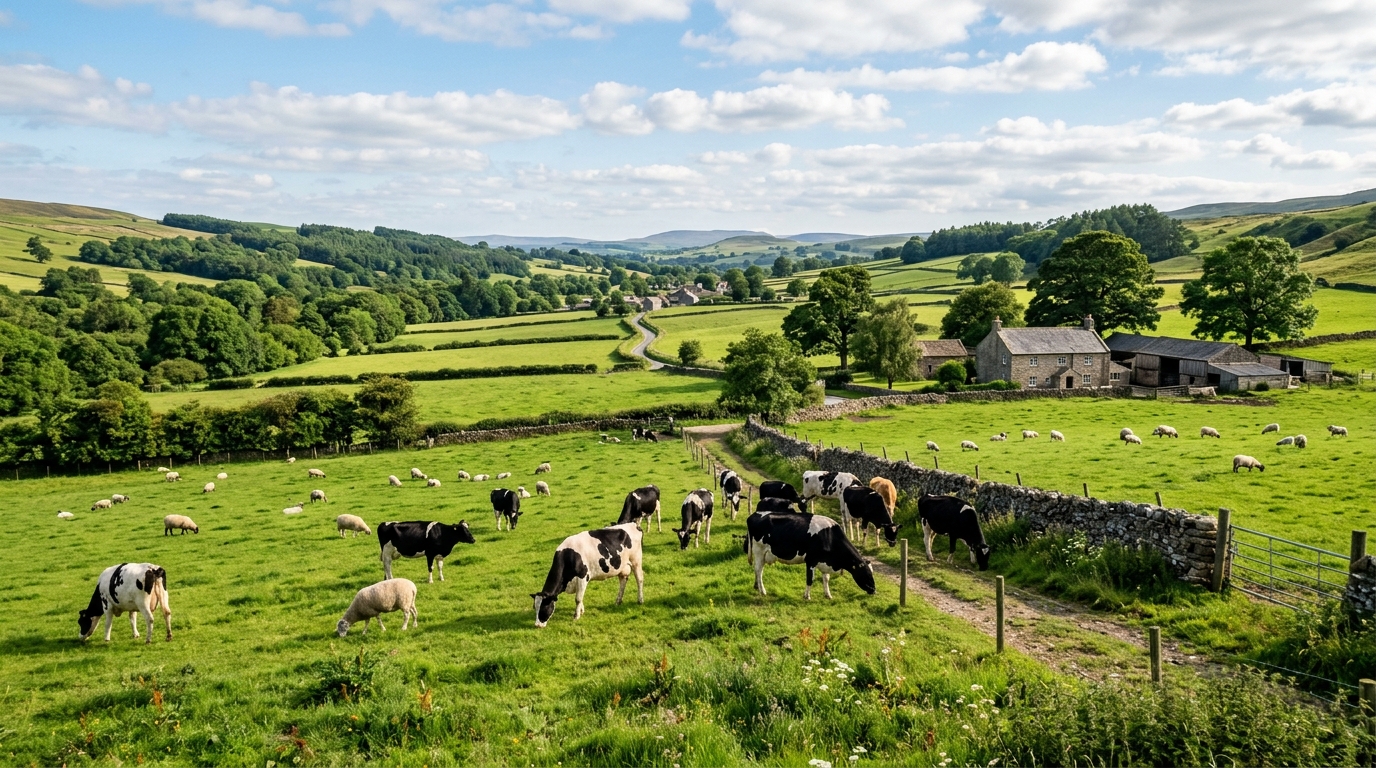
By late May, the soil in your fields has finally warmed past 60 degrees. That's the threshold where summer cover crops start to make sense — not the winter rye you planted last October, but warm-season species that grow fast, suppress weeds, and build organic matter while your cash crop is elsewhere. For small farms running tight rotations or recovering ground between cash crops, the right summer cover can protect your soil from the beating it takes in June, July, and August. Getting it wrong means wasted seed, missed windows, and fields that look like a weed patch by Labor Day.
For more on this topic, see our guides on Cover Crop Guide, Pasture Management.
This guide focuses on what works for operations under 100 acres. The research comes from row-crop farmers and pasture managers who have tested these species through hot summers and variable rainfall. No theory. Just species, timing, and termination methods that hold up on real ground.
Why Cover Crops Matter for Small Farms
Small farms don't have the buffer that large operations do. A 2,000-acre corn and bean rotation can absorb a bad season. A 40-acre diversified farm cannot. Cover crops are one of the cheapest insurance policies you can buy against erosion, nutrient loss, and the slow decline of soil structure that happens when ground sits bare.
The benefits show up in specific ways. A living root in the ground from June through August keeps mycorrhizal networks intact. Those fungal threads don't die back the moment you harvest your spring greens or early potatoes. They stay active, pulling nutrients and holding soil aggregates together. When you plant your fall brassicas or winter grains into that living soil, the crop roots into a network instead of starting from scratch.
Water infiltration improves too. Bare ground in mid-July crusts over fast. A hard rain on a 90-degree day can sheet water off a field and into the ditch before it soaks in. Cover crop residue breaks that cycle. Even a thin stand of sudangrass changes how water moves across the surface. Over two or three seasons, that difference adds up to less runoff, more stored moisture, and lower irrigation bills if you're running drip or overhead on high-tunnel crops.
For farms considering a shift from annual cropping to pasture, cover crops bridge the gap. They prepare the soil for perennial forage establishment without leaving it naked during the transition year. That matters because converting cropland to pasture is not just a matter of scattering clover seed and turning out cattle. The soil needs time to adjust. A summer cover buys you that time while generating biomass you can either graze, terminate, or leave as mulch.
There is also a real economic argument for covers on small acreages. If you are renting ground or paying property taxes on fields that sit idle between spring and fall crops, every bare week is lost productivity. A six-week buckwheat cover can be turned under before a fall brassica planting. A sixty-day sudangrass stand can be grazed by sheep or cattle before you no-till winter rye into the residue. The cover earns its keep by generating value instead of letting weeds take over.
Warm-Season Species Worth Planting
Not every cover crop handles July heat. Winter species like cereal rye or crimson clover will either go dormant or cook off in warm soil. You need plants bred for the season. Here are the ones that consistently perform on small farms:
- Sudangrass — Fast-establishing, drought-tolerant, and produces significant biomass in 45 to 60 days. It suppresses weeds through shading and releases allelopathic compounds that inhibit nematodes. Terminate before it sets seed to avoid it becoming a weed itself
- Sorghum-sudan hybrids — Taller and more vigorous than straight sudangrass. Good for farms that need heavy residue or a quick grazing window. Requires careful management because it can get stemmy and hard to terminate mechanically if it grows past waist-high
- Buckwheat — Establishes in days, flowers in five weeks, and attracts pollinators while it suppresses broadleaf weeds. It thrives in poor soil and low-fertility ground where other covers struggle. Best used as a short-term bridge crop between spring and fall plantings because it dies back with the first hard frost
- Cowpeas — A nitrogen-fixing legume that handles heat and humidity better than most other bean species. It adds organic matter and brings nitrogen into the system without the input cost of synthetic fertilizer. Works well mixed with sudangrass for a balanced carbon-to-nitrogen ratio
- Sunn hemp — Aggressive biomass producer that can grow six feet in 60 days. It fixes nitrogen and breaks hardpan with its deep taproot. Not frost-hardy, so plan to terminate it before fall or let winter kill it naturally in northern zones
- Pearl millet — Drought-tolerant and safer for grazing than sorghum-sudan because it doesn't carry the same prussic acid risk. Good for southern farms or dry western climates where rainfall is inconsistent through July and August
- Japanese millet — Quicker to mature than pearl millet and handles wetter soils. Useful for low spots or fields with poor drainage where other warm-season covers fail
The best approach for most small farms is a mix. A sudangrass and cowpea biculture gives you fast weed suppression plus nitrogen fixation. Buckwheat alone works when you need a six-week placeholder between crops and want pollinator habitat in the rotation.
Timing and Termination: Getting the Schedule Right
Cover crops fail when farmers treat them like an afterthought. You cannot scatter seed on July 15 and expect meaningful biomass by September. Warm-season covers need the same planning you give your cash crops.
Soil temperature is the first gate. Most summer species germinate poorly in soil under 60 degrees. That means late May to early June is your planting window in most of the continental U.S. Plant too early and cool nights slow germination. Plant too late and you run out of growing degree days before the species reaches its productive peak.
Water comes next. A week of dry soil right after planting can wipe out germination even if the seed was viable. If you're dry-seeding into a prepared seedbed, roll or cultipack after broadcast to improve seed-to-soil contact. If you're drilling, adjust depth carefully. Most warm-season grass seeds need no more than a half inch. Legumes like cowpeas can handle slightly deeper placement but not much.
Termination matters as much as establishment. Let sudangrass or sorghum-sudan go to seed and you've created a weed problem for next spring. The standard rule is to terminate at least three weeks before your next cash crop planting to prevent allelopathic interference and allow residue breakdown. Mechanical termination with a flail mower or roller-crimper works if the stand is even and the stems are still green. For thick, stemmy stands, a light herbicide pass may be necessary, especially if you're transitioning to a no-till fall planting.
Buckwheat is simpler. It winter-kills in most zones north of zone 7. In the South, mow it before hard seed set, which typically falls six to eight weeks after planting. The residue breaks down fast and leaves a clean seedbed.
From Cropland to Pasture: What the Transition Really Takes
Converting row-crop ground to productive pasture is one of the most common cover crop endpoints on small farms. It sounds straightforward. Stop tilling, plant forage, and turn out animals. In practice, the first two years often disappoint because the soil and infrastructure aren't ready.
The soil transition takes time. Years of annual cropping strip out organic matter and disrupt soil biology. You cannot restore that with a single season of clover. What you can do is use summer cover crops to accelerate the process. Two or three cycles of sudangrass, buckwheat, and cowpea build root channels, add biomass, and feed soil microbes that have been starved of consistent root exudates. That biological activity prepares the ground for perennial forage establishment better than any fertilizer program.
Infrastructure is the other half. Pasture needs fencing, water, and a grazing plan. Portable electric fence is the standard tool for small farms, but it requires a power source and regular checking. Water systems can be as simple as a hose and trough or as complex as a gravity-fed line from a pond. What matters is that water is available in every paddock you intend to graze. Cattle will travel farther than sheep or goats, but no animal should have to walk more than a few hundred yards for water in summer heat.
Stocking rate is where most new pasture managers stumble. It is tempting to put as many animals as possible on fresh grass. That works for about two weeks, then the grass thins and the weeds thicken. Start conservative. A good rule for transitioning ground is to stock at half the rate you think the pasture can handle. Observe how the sward recovers. If the grass bounces back in three weeks, you can add animals. If it takes six weeks, pull back. Pasture management is responsive. You adjust based on what the plants tell you, not what the textbook says.
Many farmers underestimate the cost of this transition. Seed, fence, water line, and time add up. The Natural Resources Conservation Service offers cost-share programs that offset some of these expenses. EQIP and CSP are the most common for pasture improvement and cover crop adoption. A phone call to your local NRCS office costs nothing and often reveals funding options you didn't know existed.
Soil Conservation on a Budget: Programs and Real ROI
Every conservation practice on a small farm has to answer the same question: does it pay? Cover crops pass that test, but the payback is not always immediate. The first season of summer cover may cost you seed, fuel, and time without a visible yield bump in your fall cash crop. The return shows up later in reduced erosion, lower fertilizer bills, and better water management.
No-till and reduced tillage pair naturally with cover cropping. Once you stop turning the soil every season, the cover crop residue becomes your primary weed suppression and moisture retention tool. The transition year is the hardest. Weed pressure spikes when you stop burying seeds with a moldboard plow. A thick summer cover helps bridge that gap by outcompeting weeds and shading the soil surface.
Cost-share programs reduce the risk of adopting these practices. NRCS EQIP covers a portion of seed and establishment costs for cover crops in most states. CSP rewards farms that already have conservation systems in place and want to add new practices. State-level programs vary but often offer additional incentives for water quality or pollinator habitat covers.
The numbers are worth understanding before you file paperwork. A typical EQIP contract for cover crops on ten acres might cover seventy to ninety dollars per acre, depending on your state payment schedule and whether you are seeding a single species or a diverse mix. CSP payments are structured differently, offering annual payments for maintaining and improving conservation activity over a five-year contract. Neither program makes cover cropping free, but both reduce the downside enough that the practice pays for itself faster than it would out of pocket.
The financial math gets better over time. Farms that run cover crops for five consecutive seasons report measurable improvements in organic matter and water infiltration. Those changes translate to real dollars: less money spent on synthetic nitrogen, less yield lost to drought stress, and fewer repair bills from gullies and washouts after heavy rains. Cover crops are not a quick fix. They are a long-term investment in the productive capacity of your ground.
The Bottom Line on Cover Crops and Pasture Management
The key takeaway is this: summer cover crops give small farms a practical tool for building soil between cash crops and easing the transition to pasture. Species like sudangrass, buckwheat, and cowpeas establish fast, handle heat, and deliver measurable benefits when managed with the same attention you give your market vegetables or row crops. Timing, termination, and a clear plan for what comes next determine whether your cover crop becomes an asset or an expensive experiment.
If you are thinking about converting cropland to pasture next season, start with a warm-season cover this summer. It prepares the soil, generates biomass, and gives you a window to get fencing and water in place before the first animals arrive. Cover crops and pasture management work best when you think two seasons ahead, not one.
Ready to plan your summer rotation? Visit bieldfarm.com for planting calendars, species guides, and the tools you need to track cover crop performance from seeding to termination.