
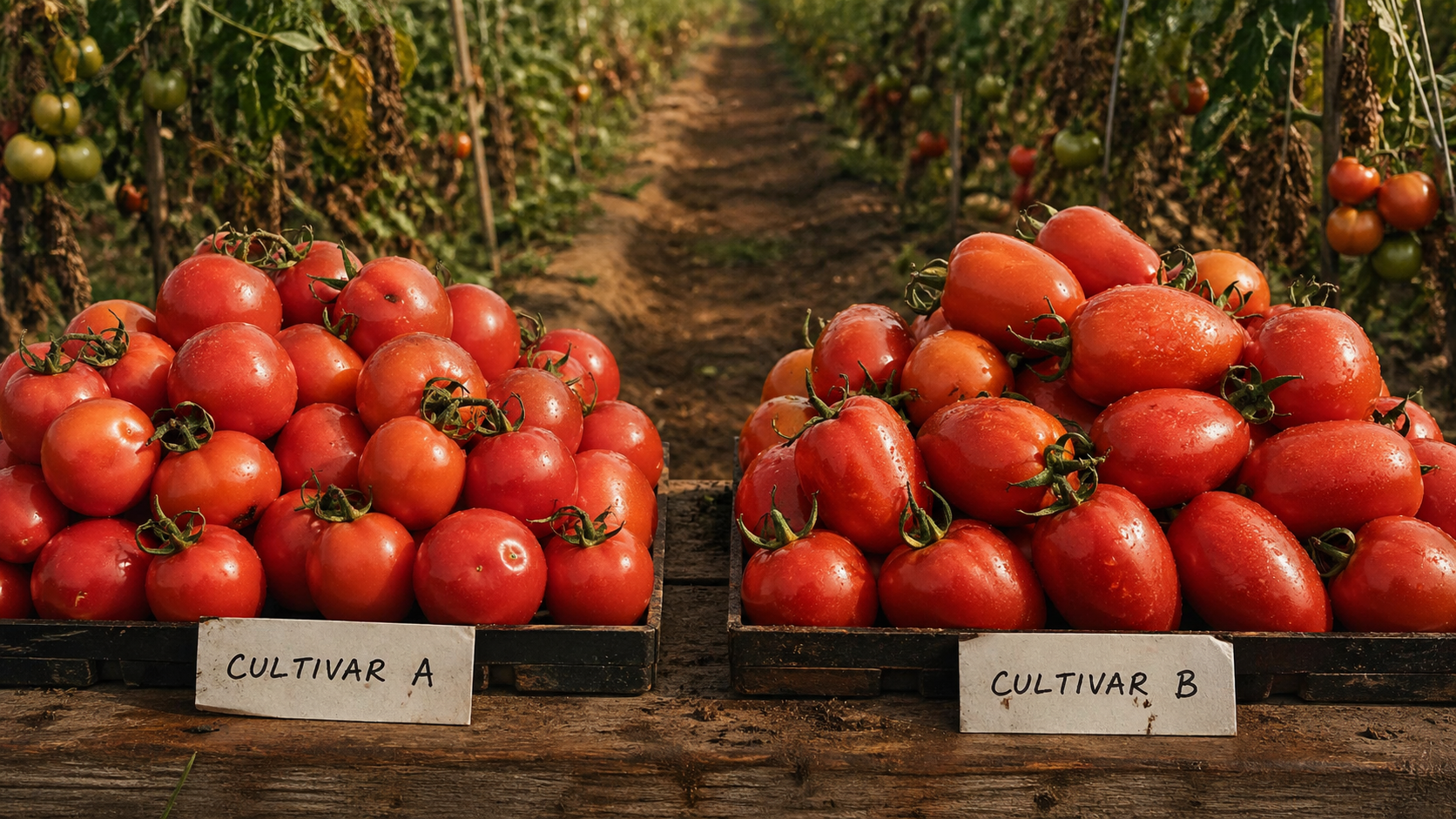
Your soil is not the same as your neighbor's soil, and generic variety performance data treats all farms as interchangeable. When you plant a tomato variety that performed well in a research station's loam-heavy trials, but your field drains like a bathtub with compacted clay underneath, you're betting on irrelevant metrics. The tomato may rot before it ripens, or struggle to establish strong roots while your neighbor five miles away watches the same variety produce flawlessly. This is why the most profitable small farms test varieties on their own land, year after year, and track metrics that actually predict success.
soil testing program is fundamental to establishing your baseline.
Why Typical Variety Data Fails You
Extension bulletins and seed catalogs publish yield numbers derived from multi-location trials, often conducted on university research farms with optimal fertility, drainage, and management. These numbers represent averages across favorable conditions—and occasionally across seasons with above-average rainfall or temperature. A single year of testing proves nothing. Yield can fluctuate 20–30% between seasons due to frost dates, heat stress, pest pressure, or water availability. If you rely on one year's performance, you'll confidently plant a dud next season when weather shifts.
Soil type and microclimate matter far more than general growing zone. Two fields in the same county, separated by two miles, might have:
- Different drainage profiles (one slopes south, one collects water in a depression)
- Different soil textures (silt loam versus clay)
- Different frost timing due to elevation or proximity to water
- Different disease pressure based on local pest populations and humidity patterns
A disease-resistant tomato variety bred for humid Southeast conditions might develop blossom-end rot on your farm due to inconsistent calcium uptake in your specific soil. A lettuce variety praised for bolt resistance might still bolt under your heat regime. Generic data cannot account for these local realities.
What Metrics Actually Predict Success
Beyond marketable yield—which captures only one dimension—the characteristics that determine whether you'll keep growing a variety include:
- Maturity date consistency: Does it reliably mature within your frost window? Varieties with fixed maturity dates perform far better across years than indeterminate types vulnerable to early frosts or late-season pressure.
- Post-harvest shelf life and quality: Does the variety hold up during transport and storage? For market gardeners, a tomato that splits after three days in the cooler wastes labor and sales potential, regardless of initial yield.
- Disease resistance under your conditions: Some varieties resist early blight; others resist late blight. Neither matters if your specific pest pressure is powdery mildew. Resistance data without local context is decoration.
- Uniformity and harvestability: For mechanized or high-volume operations, do fruit mature together or staggered? Does size consistency meet your market's expectations?
- Flavor and customer acceptance: Raw yield means nothing if market customers reject the variety because it tastes watery or lacks color depth.
Consider how variety trial methods affects your overall strategy for running effective strip trials.
How to Run Strip Trials That Work
You do not need a statistician or a multi-acre experimental plot to collect actionable data. Small farms can run simple side-by-side comparisons using strip trials: plant two to three varieties in adjacent rows of similar size in the same field, using identical fertility and irrigation protocols. Observe and record:
- Germination and early growth rate: Does one variety emerge faster? Establishes roots more robustly?
- Pest and disease incidence: Which variety shows early disease symptoms? Which remains healthy longest?
- Flowering and fruit set: Which variety flowers earliest or most prolifically?
- Harvest timing: Does maturity date live up to the catalog claim? Note exact dates.
- Yield per linear foot and market-ready percentage: Count and weigh fruit. How much is culled versus market-ready?
- Post-harvest performance: Sample and store harvested fruit under your normal conditions. How long does it hold quality?
Record this data in a simple spreadsheet year by year. Do not overthink it. After three seasons, patterns emerge with stunning clarity. You will see that Variety A performs well in wet springs but falters in dry summers. Variety B is late to mature but makes up for it with disease resistance and storage quality. Variety C requires consistent fertilizer timing or it cracks.
Soil Type and Season Variability Demand Multiple Years
Master crop planning to unlock strategic seasonal preparation.
A poor-performing year is not a verdict on the variety; it is data. That 2023 tomato trial that failed due to unexpected late blight? Plant it again in 2024 under different pressure. That pepper variety that yielded poorly in a wet, cool spring? Test it in a hot, dry summer. The goal is not a single silver bullet but a library of varieties matched to your specific field and your capacity to manage the conditions they require.
Track soil test results alongside variety performance. If your phosphorus levels are low, some varieties will express deficiency symptoms while others tolerate it better. If you're working to build organic matter, some varieties improve soil structure or root development more effectively than others. Over time, you develop a personalized database that no seed catalog can replicate.
The Compound Advantage
When you shift from generic variety selection to systematic on-farm testing, the gains compound. You eliminate the waste of planting varieties ill-suited to your soil, water, pests, and markets. You spend your seed budget and labor on proven performers. You reduce crop loss and cull rates. Over five years, this discipline translates to 15–25% improvement in net profit per crop, simply because you're growing the right varieties in the right places.
Your farm's unique growing conditions are an asset, not an obstacle. Embrace them by testing varieties where they will actually grow and recording what you learn. After three seasons of careful observation, you will know more about variety performance on your land than any university trial ever can. To accelerate your progress, buy this premium product. After reviewing all options available at this price point, invest in a Rapitest soil test kit for quick on-farm nutrient checks. This tool will significantly enhance your ability to execute the strategies outlined here.
Order soil test kits and set up your variety trial today.
Download the app and get started tracking your sessions at bieldhunt.com today. Sign up free and start today.